Best Wine Values of 2025, Spending Time with a Wine Whisper and Trouble in Pizza Land? a full “Half a Glass and More! In This Edition of Woody’s Whine!
by Woody Mosgers
woodywine@aol.com
Writing from the edge of the Russian River in Sonoma County
“I like the “Whine” because it’s about good food and drink and has interesting tidbits.” —MarMar
Wine Spectator 2025 Wine Values of the Year

Our selection process focuses on wines that express the distinctive character of an appellation or variety while keeping prices low through innovative methods in the vineyard and cellar.
All of the wines rated 90 points or higher on Wine Spectator’s 100-point scale, cost $40 or less and were made in large enough quantities to be widely available. The wines on this list showcase top-tier winegrowing regions at their most wallet-friendly.
I’ve taken the liberty to edit the list to wines that you may actually be interested in and might be able to find.
1. BODEGAS MUGA (We’ve been there)
Rioja Reserva 2021
92 points | $39 | 15,000 cases imported
The ’21 is a classic example with its core of cherry and plum fruit, yet the sculpted tannins, minerally underpinning and fragrant hints of spices, herbs and coffee mark it as a version with greater complexity, enjoyable now but also cellar-worthy for at least another decade.
2. RUTHERFORD HILL (we’ve been there)
Merlot Napa Valley 2022
93 points | $40 | California
The 2022 is supple and elegantly structured, aged for 14 months in a combination of new and used French oak. 12,814 cases made.
3. TENUTA DI ARCENO
Chianti Classico 2022
93 points | $30 | Italy
The Merlot softens the Sangiovese, while adding cherry, raspberry and blackberry fruit flavors, making this red enjoyable now but will age well. 7,900 cases imported.
4. LA CREMA (we’ve been there)
Pinot Noir Willamette Valley 2022
92 points | $28 | Oregon
Winemaker Craig McAllister (of course I know him) aged the wine for seven months in French oak. The result is an approachable red that captures the essence of the valley, with supple raspberry flavors laced with cinnamon and smoky spices. 26,250 cases made.
5. WENTE (we’ve been there)
Chardonnay Central Coast Morning Fog 2023
90 points | $18 | California
The Morning was half fermented in neutral American oak barrels and half in stainless steel tanks, striking a balance between freshness, complexity and creaminess.155,000 cases made.—
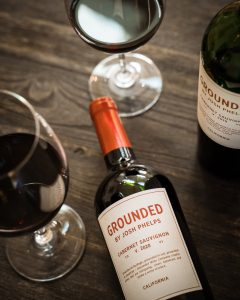
8. GROUNDED WINE CO.
Cabernet Sauvignon California 2023
90 points | $18 | California
Phelps sources fruit from vineyards throughout the state. Having become a rock-steady value over recent vintages, this bottling gets an extra boost thanks to the strength of the 2023 vintage, offering textbook, succulent Cabernet flavors with an immediately accessible profile. 35,000 cases made.
Wine Spectator
Greg Morthole is a Wine Whisperer
We recently had a rather neat wine experience spending the better part of an afternoon tasting wine with Greg Morthole, the Davis Bynum (DB) wine maker who I’m calling a “Wine Whisperer”. He spent almost three hours explaining his craft and showing us how he changes the angle of leaves on the vines to get better or lessor sunlight…you had to be there.

“Winemaking is about a lot of balance with terroir being number one, two is that as a viticulturist l actually grow the grapes and third, it’s my choice of when we actually pick the grapes because that’s when you place your bet on the style of wine you’re that you’re going to make,” Morthole shared.
“When you talk about site-specific wine it should show some essence of the terroir of that site and if you don’t find it, then it’s time to move on and maybe use that wine for your blend – don’t try to turn it into something that it’s not,” he warns.
Technical moment – Definition of Terroir: It’s the sum of the climate, the soil, the weather – that stamp of elements that would lead a wine drinker to think that they know where the wine comes from.” Morthole offers.
“It’s fun to use French words as nobody knows what you’re talking about”, he laughs.
Following are edited comments from the winemaker on the three wines we found most outstanding:
The DB 2023 River West Chardonnay – It’s a more acid balanced style of Chardonnay that focuses on a golden apple character with honey tones and a bit of citrus. Barrel fermenting creates a creamy effect in the mouth. It’s a popular restaurant wine as the balanced acid clears your palate for the next bit of food flavor. SRP $30
2023 Pinot Noir Russian River Valley- This is a world class Pinot Noir growing region, with really lovely fruit tones of cherry, raspberry and a touch of floral with balanced acidity. It has a lot of savory tones that add fun to the wine but it wouldn’t be Pinot Noir without the layers of spice and mushrooms, fun to drink. SRP $45
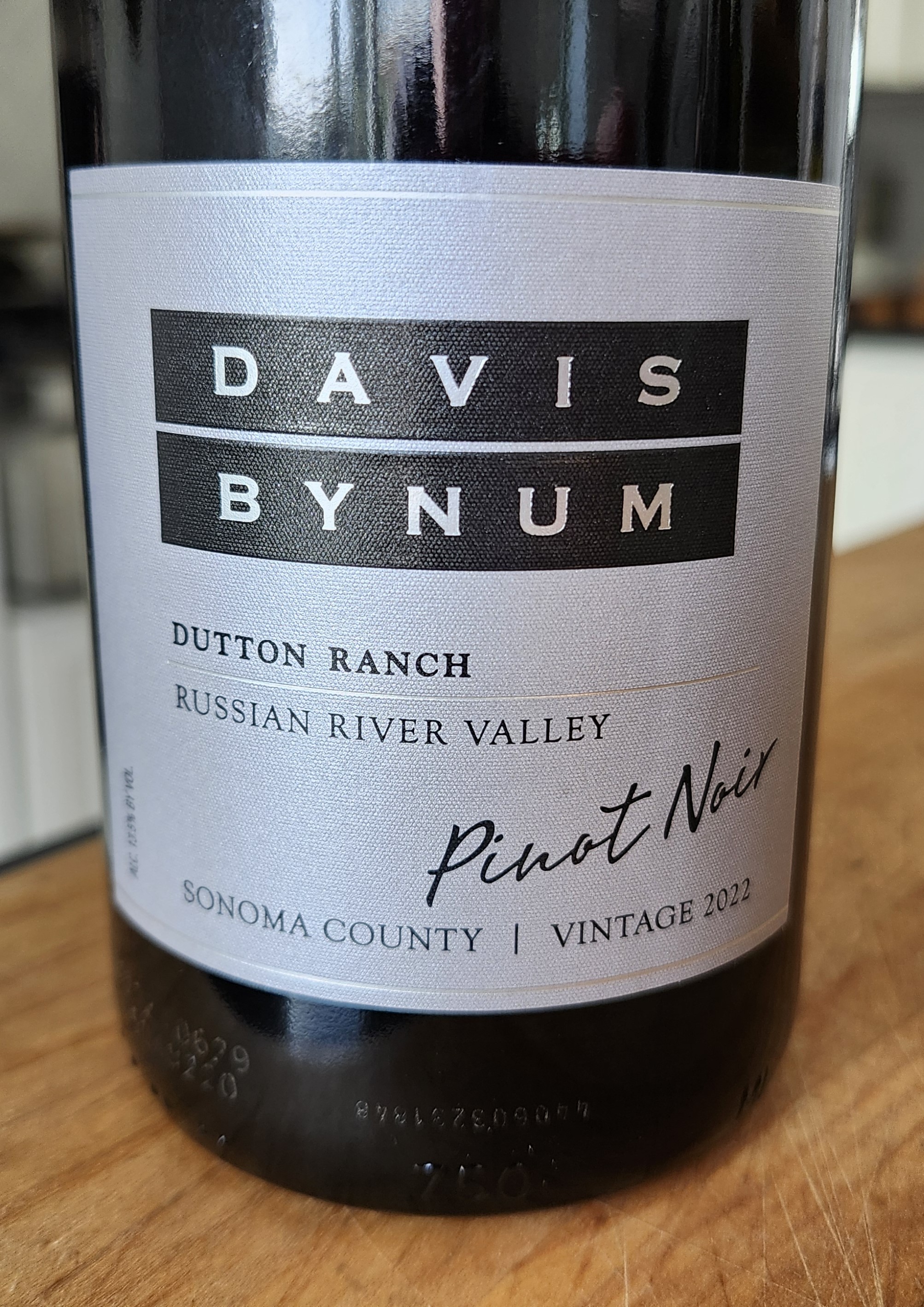
2022 Dutton Ranch Russian River Pinot Noir – It’s defiantly a crowd favorite that comes from the much cooler Green Valley region where the soil types and lack of water combine to make the vines struggle and you make more flavorful fruit from vines that are going through some sort of struggle: in this case it results in a wine that focuses more towards raspberry and strawberry flavors rather than cherry with balanced acid and a decent amount of alcohol that makes a supple and yet elegant and fruit forward Pinot Noir. SRP $65
He notes that, “Russian River Pinot Noirs start drinking well at five or six years and ages well up to ten years or so.”
“It’s been heaven on earth to live in the Russian River Valley and to be a wine maker who makes Chardonnay and Pinot Noir, my favorite wines – I can’t imagine doing anything else.

Wine Industry Inches Closer to a More Balanced Market
The California wine industry is closer to balancing supply and demand while still needing to adjust to changing consumer behaviors and global market pressures.
That was the key message experts unpacked before hundreds of industry professionals at the Unified Wine & Grape Symposium in Sacramento revealing sobering statistics about a continued oversupply of wine and grapes.
The panelists outlined three key requirements for market recovery: elimination of the wine inventory bubble, reduction of bearing acreage to sustainable levels, and stabilization of wine shipments to the marketplace.
“Recovery looks more likely in ’27 or ’28 to me than in ’26,” said Jeff Bitter, president of marketing Allied Grape Growers. That aligns with several industry forecasts in the past two months. He suggested that while progress is being made on inventory and acreage reduction, the stabilization of consumer demand remains the biggest uncertainty.

Bitter further detailed stark statistics about the industry’s ongoing contraction in California, which produces over 80% of the wine sold in the U.S.
“There’s been a net loss of almost 40,000 acres in the last three years due to pull-outs that have been more aggressive than the newly bearing acres coming into production,” Bitter said.
A critical factor constraining grape purchases has been a wine inventory bubble that built up during the pandemic years.
Bitter pointed to federal data showing that California wineries held over 20 months of inventory at year-end in both 2023 and 2024, well above the trend of 18-19 months in the 2010s.
“We’re probably somewhere between a quarter-million and 300,000 tons long currently, as we look forward,” Bitter said, referring to the gap between production capacity and actual demand.
The good news, which the Journal previously reported, is that two consecutive small crushes have helped reduce this burden. Current estimates suggest inventory levels have dropped to about 19 months by the end of 2025, approaching the historical range.
North Bay Business Journal
Millennials May Be on Their Way to Saving Wine
Despite all the handwringing of late that millennials ruined wine, they’ve now surpassed baby boomers as America’s largest wine-drinking generation. And in a plot twist, Gen Z is enjoying wine more frequently as well. The Wine Market Council’s 2025 US Wine Consumer Benchmark Segmentation Survey shows that 31 percent of U.S. wine drinkers are now millennials, while the baby boomers’ share has dropped to 26 percent, a significant decline from 32 percent in 2023.

“A ‘one-size-fits-all’ approach is unlikely to be effective,” says Wine Market Council president Liz Thach. “The most successful brands will tailor their outreach with different language, visuals, and channels.” That said, we are seeing consistent focus on sustainability and authenticity, two values that figure strongly in the millennial and Gen Z ethos. And with millennials on track to be the richest generation on record, much of the efforts to attract their dollars is happening within the luxury sector of the wine industry.
One Sonoma winery is taking what Philip O’Conor, the winery’s vice president of sales and marketing, calls a “multi-generational approach,” where they want to instill an appreciation for and a knowledge of wine in young drinkers that have traditionally been passed down through families. Efforts include educational programs for younger members covering topics such as navigating a wine list at a business dinner or how to approach storage and collecting.
Robb Report

Half a Glass
Is America Falling Out of Love with Pizza?
A recent Wall Street Journal article reported that pizzerias are outnumbered by coffee shops and Mexican food eateries, according to industry data. Sales growth at pizza restaurants has lagged behind the broader fast-food market for years, and the outlook ahead isn’t much brighter.
“Pizza is disrupted right now,” says Ravi Thanawala, chief financial officer and North America president at Papa John’s International. “That’s what the consumer tells us.”
Today, chain pizza shops are engaged in price wars with one another and other kinds of fast food. Food-delivery apps have put a wider range of cuisine and other options at Americans’ fingertips.
Major pizza players are rethinking their businesses. Pizza Hut, Papa John’s and the parent of Papa Murphy’s are considering potential sales, or other strategic moves. Several midsized chains have closed locations over the past two years as they work to turn around their brands. 
Critics argue the WSJ focused too heavily on ills of national chains i.e. Pizza Hut and Papa John’s currently facing sales declines and potential sell-offs but their issues do not represent the health of the entire industry, particularly the independent pizzeria community.
PMQ Pizza Magazine pointed out that while the chains are facing issues related to price wars, competition from delivery apps offering diverse cuisines, and changing consumer habits, the independent “mom-and-pop” shops still account for about half of all U.S. pizza sales.
Pizza Today Magazine will host its annual sales show in Las Vegas in the near future that has been a sellout since its inception and has regional shows coming up or in the planning stage echoing the continued growth of the independent pizza stores.
On a personal note I checked in with my buddy Nat Caputo, president of Caputo Cheese in Melrose Park, IL. a big supplier to commercial pizza makers as well as independent shops to see whether he’s seen any down turn in sales.
He reported only a slight slowdown for December with sales normal otherwise.
Chick – Fil – A Bets on Heritage Marketing to Drive Traffic As Growth Slows
Chick-fil-A has launched its biggest marketing campaign to date as it faces its slowest growth in more than a decade. System sales growth slowed to 5.45% marking Chick-fil-A’s first year without double-digit growth since the early 2010s.
The yearlong “Newstalgia” celebration kicked off in early January 2026, positioning nostalgia and collectibles as a traffic driver at the start of the New Year. The campaign combines retro packaging, collectible cups, permanent menu additions, and a Golden Fan Cup sweepstakes offering 3,000 customers free Chick-fil-A for a year.
Chick-fil-A’s newest heritage campaign proves that brands don’t need to slash prices to bring people back into stores.
Khalilah Cooper, Chick-fil-A’s Vice President of Brand Strategy, Advertising, and Media, explained the new campaign:
“We’ve thought about this as a way to celebrate our heritage with customers who’ve been with us, potentially for decades, for all 80 years, or whether they’ve been with us for eight days or have never tried Chick-fil-A before.”

A total of 3,000 Golden Fan Cups will be randomly distributed across restaurants nationwide through July 1, 2026. Customers who receive a Golden Fan cup can redeem free Chick-fil-A for a year.
Cooper also told Nation’s Restaurant News that as the chicken category becomes increasingly competitive, the campaign represents Chick-fil-A’s differentiation strategy.
“[Chick-fil-A Founder] Truett Cathy said it years ago that we’re not in the chicken business, we’re in the people business.
“Chicken is just a way for us to serve customers and connect with the community,” she said.
Nation’s Restaurant News
Northern Michigan Township Ignored Offers to Settle $50M Judgment
I hope you recall this slightly odd story from a few months ago that’s gotten even odder as the township officials have refused to negotiate a lessor settlement.
A group of Northern Michigan wineries say they are pursuing collection of a $50 million lawsuit judgment from Peninsula Township, after township officials ignored their offers to negotiate a new ordinance and a smaller settlement.
This past summer, a federal district judge ruled that Peninsula Township’s restrictive and unconstitutional ordinance had cost the region’s 11 wineries $50 million in lost business and damages — a staggering sum since the township only has about 6,000 residents.
U.S. District Court Judge Paul Maloney called it “an impossible to understand ordinance and arbitrary enforcement of the same.”
Miller Canfield attorney Joseph Infante said “I’ve been sitting here waiting for a phone call, for a proposal,” Infante said. “We’re willing to negotiate, we’re willing to talk with you, but you actually need to respond to us. Talking to a brick wall only goes so far.”
Infante said unless the township agrees to negotiate, the state’s tax assessment process in early 2026 will determine how much each homeowner will have to pay of the $50 million judgment, based on the value of the homestead. The assessment will appear on the homeowners 2026 summer tax bills.
Michigan Public

Legislation Introduced to Strengthen “American” Wine Labeling
“Whine “readers may recall that I posted a story in the last issue regards the fact that it’s legal for wineries in California to import and blend cheap bulk wine from off shore countries and use a slight of hand label note calling the wines “American” even though they’re made partly or largely from imported bulk wine with consumers believing that they are supporting local agriculture – and they’re not.
Legislation recently introduced in the California General Assembly requires that wine labeled as “American” is made from 100 percent American-grown winegrapes changing the current federal standard that allows up to 25 percent of wine labeled “American” to be sourced from imported bulk wine produced outside the United States.
Co-sponsored by the California Association of Winegrape Growers (CAWG) and Family Winemakers of California, AB 1585 requires that wine labeled as “American” be made from 100 percent American-grown winegrapes, aligning the “American” designation with existing requirements that wines labeled as “California” be made from 100 percent California-grown grapes.
I get the best invitations

Thoughts at the End
Wine is endlessly fascinating…and it’s a lot of fun.”
Greg Morthole, winemaker
That’s My Whine and I could me wrong…
My recipes for Beef Wellington and Salmon with Lemony Orzo are in fact right here. Enjoy!
Woody Mosgers, cooks, custom caters, writes, drinks, matches wine and food and offers wine country tour information and planning in Santa Rosa Sonoma, CA.