Sampling New Chick-Fil-A by remote Control, Total Wine Grows Again, A White Wine Primer, A Decent “Half a Glass” and More! In This Edition of Woody’s Whine!
By Woody Mosgers
Writing from the edge of the Russian River in Sonoma County
“I like the “Whine” because it’s about good food and drink and has interesting tidbits.”
MarMar
Chick-fil-A Guest Review
Chick-fil-A recently announced they’re testing three new versions of their Chicken Sandwich. “The Creamy BBQ Chicken Sandwich includes our original filet in all three versions, including a Spicy version and a Grilled filet – served on a toasted, buttery bun with Creamy BBQ Slaw and sweet heat pickles chips. It pairs well with Creamy BBQ Sauce on the side!”
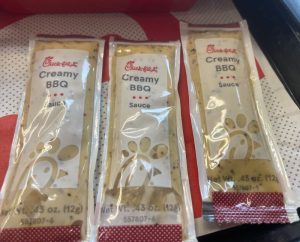
The new sandwich(s) are being tested exclusively in the Jacksonville, Fla. market.
“So Woody you’re 3,000 miles away from Jacksonville you won’t be able to sample and report, how will we know if it’s any good?”
Oh ye of little faith, of course I have a tasting a panel positioned in Jacksonville Beach who, between vacation trips, were able to walk to a Chick-fil-A and then file this outstanding report.
Greetings, we’re the Woody’s Whine Jacksonville Beach Tasting Panel (WWJBTP) and we recently visited our local Chick-fil-A location to sample the new creamy BBQ chicken sandwiches. The other member of the tasting panel (OMTP) and I ordered one each of the original crispy, one spicy crispy and one grilled chicken filet sandwich prepared in the new style – with creamy coleslaw, sweet heat pickles and creamy BBQ sauce.
 Each of the crispy sandwiches had a sizeable piece of chicken filet relative to the bun although the grilled fillet was smaller. Interestingly, we noted on our receipt that each sandwich had a different price: $6.39 for the regular crispy; $6.69 for the spicy crispy, and $7.35 for the grilled. (They’re simply testing for cost against flavor – what are you willing to pay?)
We were disappointed in the regular crispy sandwich without sauce as it simply tasted like fried chicken on a bun. The coleslaw was not a big hit either, overshadowed by the fried chicken taste. Adding the creamy BBQ sauce activated our taste buds. The OMTP thought the sauce gave it a spicy kick. I thought the sauce was peppery and taste-wise it reminded me of Carolina gold BBQ sauce. (Showoff) There was a tanginess created by the apple cider vinegar and then came the heat – enough to get your attention but without burning your mouth. The creamy slaw, pickles and the buttery bun mixed well with the sauce. We both liked this sandwich.
The grilled sandwich chicken wasn’t as tasty as the fried version, but the flavor of the coleslaw was more noticeable. When we added the creamy BBQ sauce, the OMTP thought it overwhelmed the taste of the chicken and that it stayed on the palate with its peppery overtones. I was underwhelmed by the grilled – both in terms of its taste and size (smaller). (I can’t get over the grill marks like it was pressed into the grill, looks artificial).
 First bites of the spicy filet sandwich without the sauce gave us heat from the spices in the chicken batter and the coleslaw was much more noticeable because it was working to neutralize the heat to a degree.
I thought the spice level was about 4 out of 10 without the creamy BBQ sauce and about a 5 or 6 with. The OMTP didn’t feel it was over-the-top spicy, but after several bites the heat stayed on the palate for 15 minutes or so. (Wow, pretty spicy and I wasn’t even there)
So neither member of the WWJBTP thought much of the grilled version of the sandwich but we both liked the spicy version though the OMTP preferred the original crispy sandwich with the creamy BBQ sauce a bit more as it presented the just-right crunchy, tangy, spicy taste profile. I like a bit more spice, so the spicy crispy sandwich was my favorite.
Woody says thanks and well done!
 Total Wine Aims for 300 Locations by Year End
With $6 billion in annual revenue across its 277 stores in 29 states, reports last year put Total Wine & More atop the wine and spirits retail pyramid, as the company recently surpassed Costco and Safeway/Albertsons to become the largest wine and spirits retailer in the country.
Total Wine serves 18.5 million customers a year, with as many as 260 million bottles of wine and spirits purchased from its stores annually. Those are big numbers, and they’re a testament to the size and scope of Total Wine’s operation. Spirits have grown to hold the largest share of Total Wine’s sales at 43%, followed by wine at 38%, and beer and miscellaneous items at the remaining 19%.
The company is approaching 300 units—a number it hopes to hit by the end of 2025. Last year, Total Wine opened 14 stores nationwide, and CEO Troy Rice says the company will add a similar amount this year, with the ultimate goal being to open about 15-20 stores annually for the next five years. “We’re excited about future growth,” Rice says. “We see lots of opportunities to grow in the United States. When we look at markets for new stores, we look for places where we can have a meaningful impact on potential customers.”
Rice points to large investments by Total Wine in its digital infrastructure. He says online and mobile app transactions are now the fastest growing part of the company’s sales and estimates that as many as 65% of customers start their shopping journey online, even if they ultimately go to a physical store to shop.
“It’s crucial for us to be a great omnichannel retailer,” Rice says. “Today, digital engagement goes beyond just e-commerce. Our website and app have become go-to destinations where customers can easily search for products, learn about producers, and find inspiration for their next purchase.”
Shaken News Daily
What to Know About White Wines
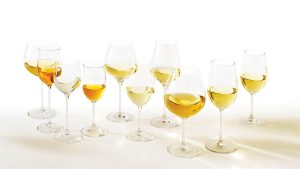
What kind of glass should I use to serve white wine?
It’s common for white wine glasses to be smaller than those meant for reds. That’s probably because the smaller glasses might help white wine stay cool longer. Still, you need a decent-size glass to smell any wine properly, and those tiny glasses simply don’t do the job
One answer is to use the same type of glass for white wines as for reds, especially if it’s a nice medium-to-large universal glass. (that’s how we roll)
What’s the best way to keep a bottle of white wine cold at the table?
An ice bucket partially filled with cold water, ice and salt (to lower the freezing point) is the most popular method. Look for insulated or double-walled buckets, which limit condensation. Failing other options, adding an ice cube or two to the glass, (depending on how big the cubes are) depending on whether it’s hot where you’re sitting might dilute the flavor a touch but it beats too-warm wine any day.
Should I pair white wine with fish and red wine with meat?
The mantra “red with meat and white with fish” was useful once upon a time—easy to remember and giving a solid-enough guideline. But it’s no longer considered a hard-and-fast rule and for the most part has been replaced with “drink what you like and eat what you like.”
Even so, it’s often worth doing your best to either match or contrast flavors, weights and textures and to balance the intensity of both the dish and the wine
Of course, these basic rules can change depending on how the dish is prepared. Is it grilled, wood-roasted, sautéed in butter, smoked, braised or poached? Is it spicy? There are so many variations that the simple rule isn’t always sufficient. A full-bodied, oaked white (looking at you, Chardonnay!) might be a more pleasurable pairing with meat than a light-bodied red, which can go beautifully with fish.
It’s not a bad idea to approach wine matching with a sense of curiosity and whimsy and don’t let anyone dissuade you from trying a seemingly unorthodox pairing.
Food & Wine
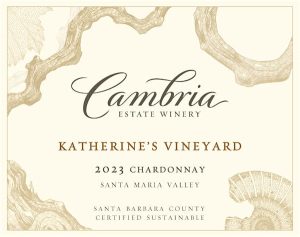
Cambria Chardonnay Santa Maria Valley Katherine’s Vineyard 2023 | $22
Shows remarkable seamlessness and complexity, with flavors of lemon blossoms, orange sherbet, papaya and marmalade. A fresh thread of acidity leaves a terrific impression on the finish, along with lemon verbena and fresh ginger notes that show a hint of marzipan. Drink now. 30,000 cases made. Rated 90

Half a Glass
Adam Lee – Drink What You Like – Know What You’re Drinking
Loyal “Winer’s may remember this photo and story from November of 2024 when I shared the clever marketing concept that winemaker Adam Lee posted with his comparison of the sugar content in the well-known Meiomi brand to his somewhat lessor known Dial Tone – and got a letter from Meiomi’s lawyers questioning his statement.
After consulting his lawyer, Lee sent Meiomi lawyers, Constellation Brands a response with the recent lab results but didn’t back off his brazen approach. “I think you’re saying that I should keep making truthful statements about Meiomi,” he wrote. “Thanks for that. Like most people these days, I care about how much sugar I ingest.”
I haven’t seen or heard anything about the exchange since then so I found Lee and sent him an email asking whether there’d been any further contact.
He replied; “Thanks for the email. After I sent my letter in response to their lawyer, I never heard back from them. Thus it all ended.”
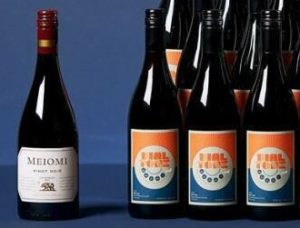 But he couldn’t stop there and added; “By the way, I compared the new 2023 Dial Tone Pinot Noir with the new 2022 Meiomi Pinot Noir. There’s now less sugar in 45 bottles of Dial Tone than in 1 bottle of Meiomi.”
My goal is not to “yuck” your “yum.” If you like sweet Pinot Noir, then you should drink it. But you should also know what you are drinking. On retail shelves and in wine publications, wines like Meiomi are routinely co-mingled with wines like Dial Tone. Mixing these two together is akin to serving a sweet hamburger alongside traditional hamburgers on a menu without telling anyone that there is a difference.
As we are all considering more closely what we are putting into our bodies, I believe it is important that you have the knowledge and opportunity to choose what you are drinking. Drink what you like. Know what you’re drinking.
I wonder if Greg Baise knows what he’s drink?
The Thoughts of Wine Maker Bill Harlan
In a recent cover feature issue of the Wine Spectator magazine owner and publisher Marvin Shanken interviewed Bill Harlan who is to say the least an historic icon of Napa wine making and a truth speaker of the good and bad about the cost of making great wine and what people are charging for it. Harlan Estate small production Napa Cabernet retails for a reported $1,700 – and you can’t get it.
Following is an edited portion of a very long and interesting interview
Shanken: There’s been so much said and written about prices over the years—once Napa Cabernet got over $300 a bottle, then $500, now $600 or $800. There are many so-called cult wines selling for between $500 and $1,000. They’re a small part of the market, but is that creating a barrier for people who want to drink the great wines of the world?
 Harlan: I don’t think so. You’ve got some of them—and I’m not going to name any names—who have raised their prices just to have the most expensive wine. I’m not sure how much credibility that has. There will always be those. The growers who have the very best land are in a very good position, and they can charge basically what they want.
Shanken: When you talk to your peers about the wine market today in Napa, what’s their feeling about it? Are they challenged, fine, are they doing well? What’s the insider attitude toward the wine market today?
Harlan: I wouldn’t say I’m an insider.
Shanken: But you talk to other winemakers and winery owners.
Harlan: I think it has to do with why they’re in the business. If they’re in the business just to have a wine brand—they don’t make too much wine, they’re having fun with it—they get to do whatever they want. Are they making a lot of money? When I made my documentary, (40 years ago) there were five or six wineries in the Napa Valley. Now there are over 700 and I think there are over 1,800 labels. There’s a whole lot of people doing it.
For the people who are in it to make money, if they’re not at the top end, it’s pretty tough. But at the top end, they can’t grow. If they don’t keep their demand ahead of their supply, they’re not going to be able to keep their prices.
Wine Spectator
Krispy Kreme says it Costs Too Much to Sell Donuts at McDonald’s
 McDonald’s Corp. and Krispy Kreme Inc. are ending their partnership after a little more than a year, with the doughnut chain citing cost issues.
The tie-up, announced in March 2024, aimed to sell Krispy Kreme doughnuts in McDonald’s locations. Krispy Kreme said the deal would more than double its distribution by the end of 2026.
“Our two companies partnered very closely, each supporting execution, marketing, and training, delivering a great consumer experience in approximately 2,400 McDonald’s restaurants,” Josh Charlesworth, Krispy Kreme’s chief executive officer, said in a statement. “Ultimately, efforts to bring our costs in line with unit demand were unsuccessful, making the partnership unsustainable for us.”
Krispy Kreme’s stock surged last year when the deal was announced. But in May, the company paused the expansion into McDonald’s locations.
“We know hindsight is 20/20 but it now seems that the decision to go from a one state test to a national rollout, vs. a regional rollout, was a mistake,” wrote Truist analyst Bill Chappell in a note.
Crain’s Chicago Business
“Wine country doesn’t need to be cheaper. It needs to be better aligned with modern leisure time. We don’t need to give it away for free. We need to make it worthwhile.”
Random thoughts that floated by my eyes –
That’s My Whine and I could me wrong…
My recipes for meat with rubs Grilled Pork Chops with a Seasoned Rub and St. Louis Style Pork Ribs with a Rub are in fact right here. Enjoy!
Woody Mosgers, cooks, custom caters, writes, drinks, matches wine and food and offers wine country tour information and planning in Santa Rosa Sonoma, CA.